
Hardboard Siding on 1980s and 1990s Homes: Painting, Sealing Edges and Replacing Swollen Boards
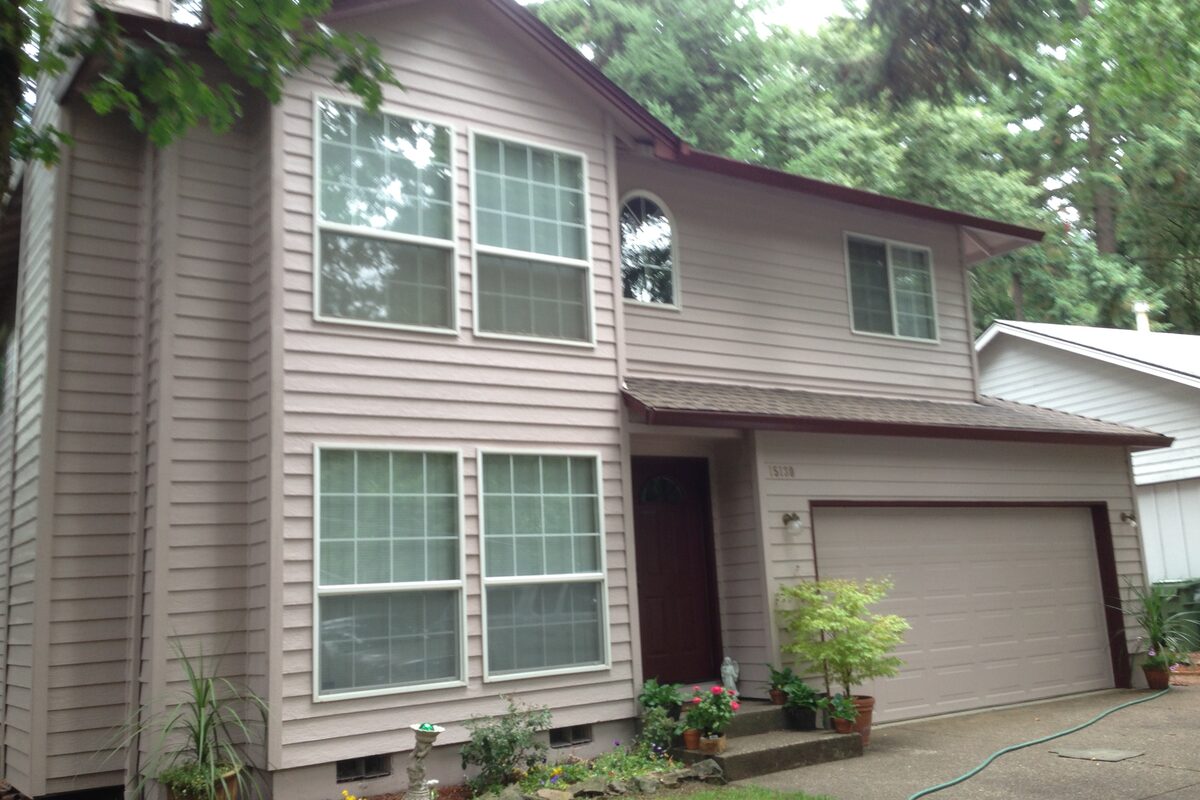
Hardboard siding, a pressed wood-fiber product widely used in the 1980s and 1990s, lasts when its paint keeps water out and fails quickly when it does not. Census data shows about 45% of Matthews homes were built from 1980 to 1999, so a lot of houses here have it.
How to Recognize Hardboard
Hardboard lap siding usually has a smooth or embossed wood-grain face, is about half an inch thick, and feels denser and heavier than plywood. The back is often smooth with a printed pattern. Some product lines from that era had widespread failures and lawsuits, so many owners already know the brand name on their house.
How It Fails
- Swollen bottom edges. The lowest edge of each board is where water drips and wicks in. Swollen edges look puffy, flaky or "mushroomed."
- Soft spots at nails. Water gets in at nail holes where paint has cracked.
- Cut ends at corners and trim. Unsealed ends absorb water.
- Boards near grade, roofs and decks. They stay wet longest.
Swelling is permanent. A swollen board will not shrink back when it dries.
Repair Before Paint
- Probe every wall. Press a screwdriver into bottom edges and around nails.
- Replace boards that are swollen or soft. Fiber cement or engineered wood boards with a similar reveal are common replacements when the original profile is no longer made.
- Seal bottom edges and ends on sound boards. Prime and paint the bottom edge (the drip edge) carefully; this is the most important brush stroke on the house.
- Caulk joints and nail holes with a paintable sealant where appropriate.
Paint
Use a quality exterior acrylic, two coats, over primed repairs. Keep paint films intact; hairline cracks are how water gets back in. Repainting on schedule matters more with hardboard than with almost any other siding.
Frequently Asked Questions
Can swollen hardboard be repaired?
Not really. Swollen boards should be replaced. Small soft spots can sometimes be cut out and patched.
Should I replace all my hardboard siding?
Not if most boards are sound. Replacing the bad ones and keeping the rest painted is usually the better value.
Why is only the bottom edge damaged?
Water collects and drips from the bottom edge, and splash-back from the ground keeps the lowest course wet.
How often should hardboard be repainted?
Before the paint cracks or chalks heavily, typically every 7 to 10 years, sooner on sunny walls.
Hardboard on Your House?
We probe every board and list replacements in writing before painting. See wood rot repair or contact us.