
Doors & Hardware Off
Doors, drawer fronts and hardware removed and labeled so every piece goes back where it came from, with hinges adjusted on reinstall.
Doors and drawer fronts taken down and sprayed, boxes cleaned, sanded and primed in place, and a cabinet-grade enamel that cures hard. The kitchen stays usable for most of the job.
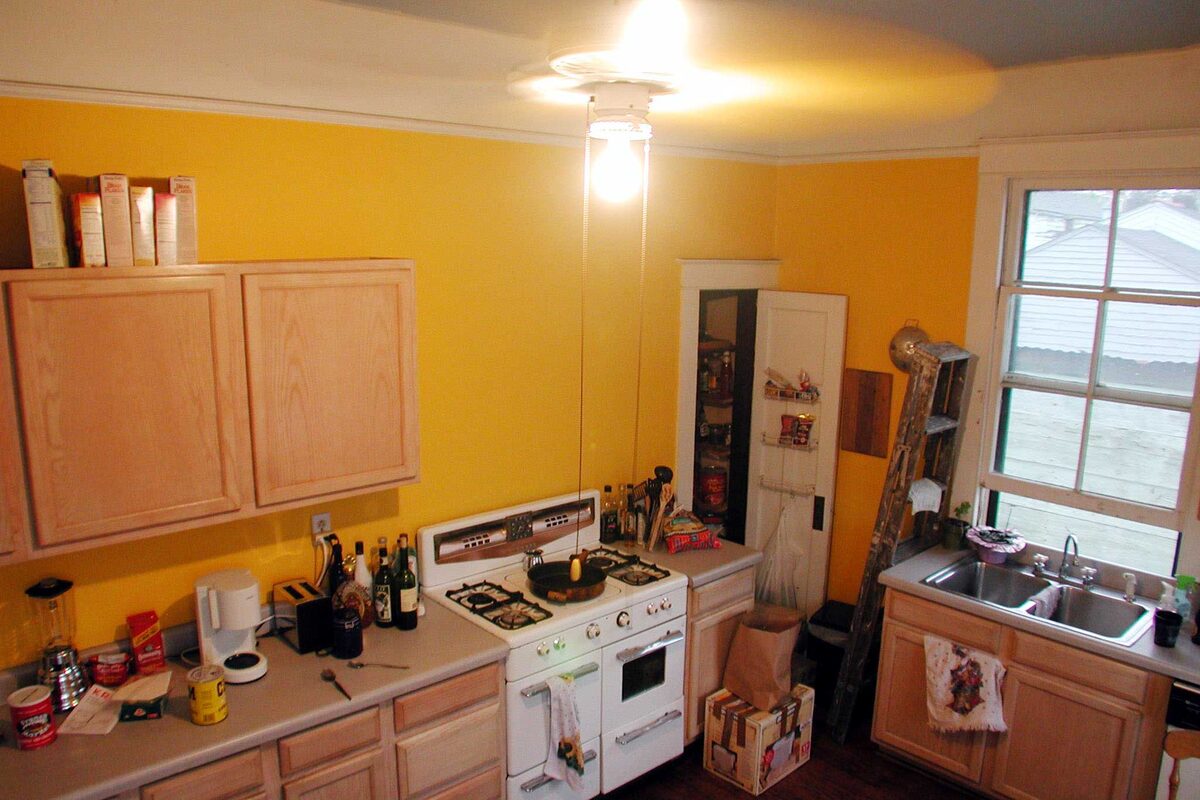
Cabinet painting works when the boxes and doors are solid and the problem is the finish or the color. It is the wrong fix for swollen or delaminating boxes. Here is how to tell.
Cabinets take more abuse than any wall in the house, so the prep and the product are different from wall painting.
Doors, drawer fronts and hardware removed and labeled so every piece goes back where it came from, with hinges adjusted on reinstall.
Every surface cleaned with a degreaser. Kitchen grease is invisible on wood and is the most common reason cabinet paint fails.
Surfaces scuff-sanded, open oak grain filled if you want a smooth look, and dings repaired before priming.
A bonding or stain-blocking primer so paint grips the old finish and tannins in oak do not bleed through white.
Doors sprayed in a dust-controlled space; boxes sprayed or brushed in place under masking. Two coats of a urethane-modified or cabinet enamel.
Doors rehung, hinges adjusted so gaps are even, new or original hardware installed, and care instructions for the first weeks while the finish cures.
Not sure if your cabinets are good candidates? Send us a photo of a door and the inside of a box.
📞 Call (980) 243-8188A large share of Matthews houses went up in the 1980s and 1990s, when stained oak cabinets were standard. Many of those boxes are solid hardwood plywood or face-frame construction that will outlast another two decades, which makes them better candidates for paint than replacement.
Two things decide whether paint lasts on them: grease and humidity. Cooking grease builds up on the doors nearest the range and has to be removed completely. And in humid Charlotte-area summers, cabinet enamels take longer to cure, so we control the spray space and give each coat its full recoat time rather than rushing.
Painting the cabinets also means fumes in the kitchen. We use waterborne cabinet enamels where they suit the job and ventilate during spraying, following EPA guidance on VOCs indoors. In homes built before 1978, sanding old finishes follows lead-safe rules.
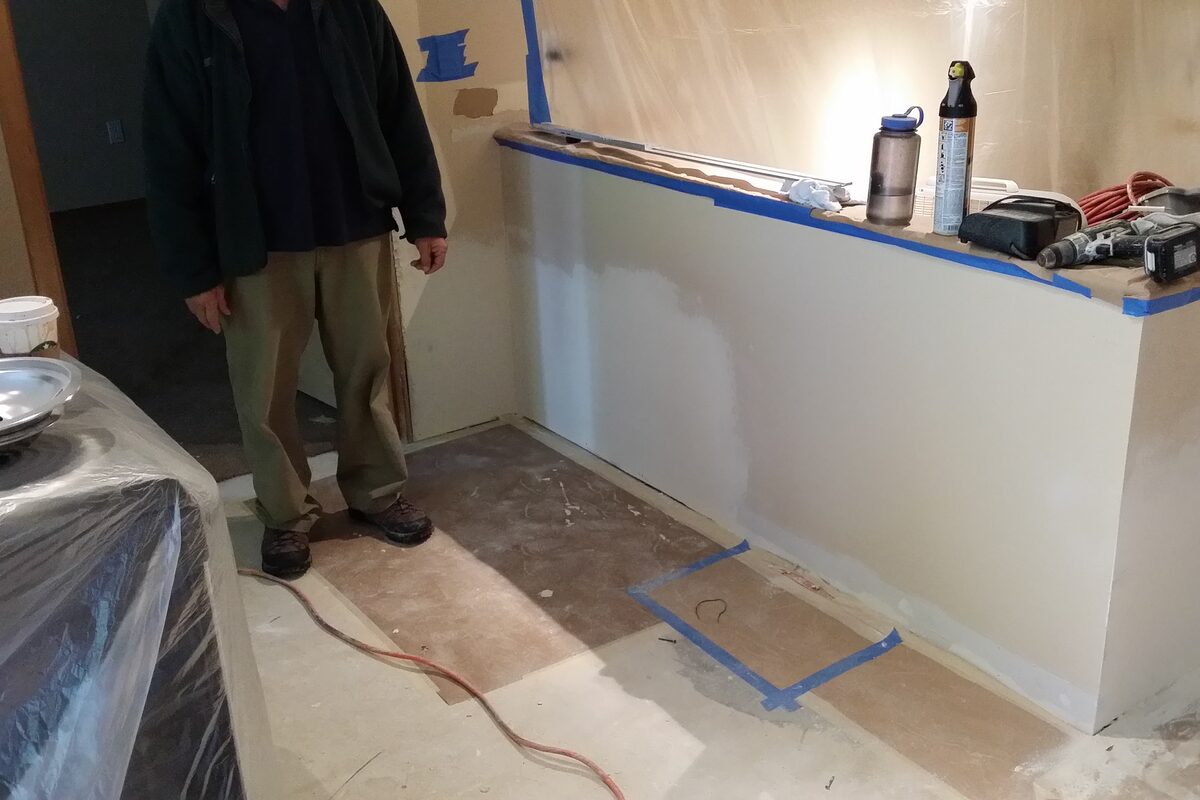
Most of the kitchen stays usable. Counters, floors and appliances are masked, and the doors leave the room for spraying.
We check for swelling or loose joints, confirm the color and sheen, and write up the door and drawer count.
Doors, drawers and hardware come off and are labeled; counters, floors and appliances are covered.
All surfaces degreased, sanded and primed with a bonding primer; grain filled if requested.
Two finish coats, full recoat times, then doors rehung and adjusted and hardware installed.
Ready for step one?
Call (980) 243-8188Ask what product goes on, how long it needs to cure, how doors will be finished, and what happens if a door chips in the first year.
Covers ventilation during and after interior painting and why low-VOC products help.
Explains the lead-safe rules that apply when painting work disturbs paint in homes built before 1978.
When paint is the right call and when it is not.
Grain filler, primer and what smooth costs.
Vanities can be done with the bathroom repaint.
National benchmarks per door and per kitchen.
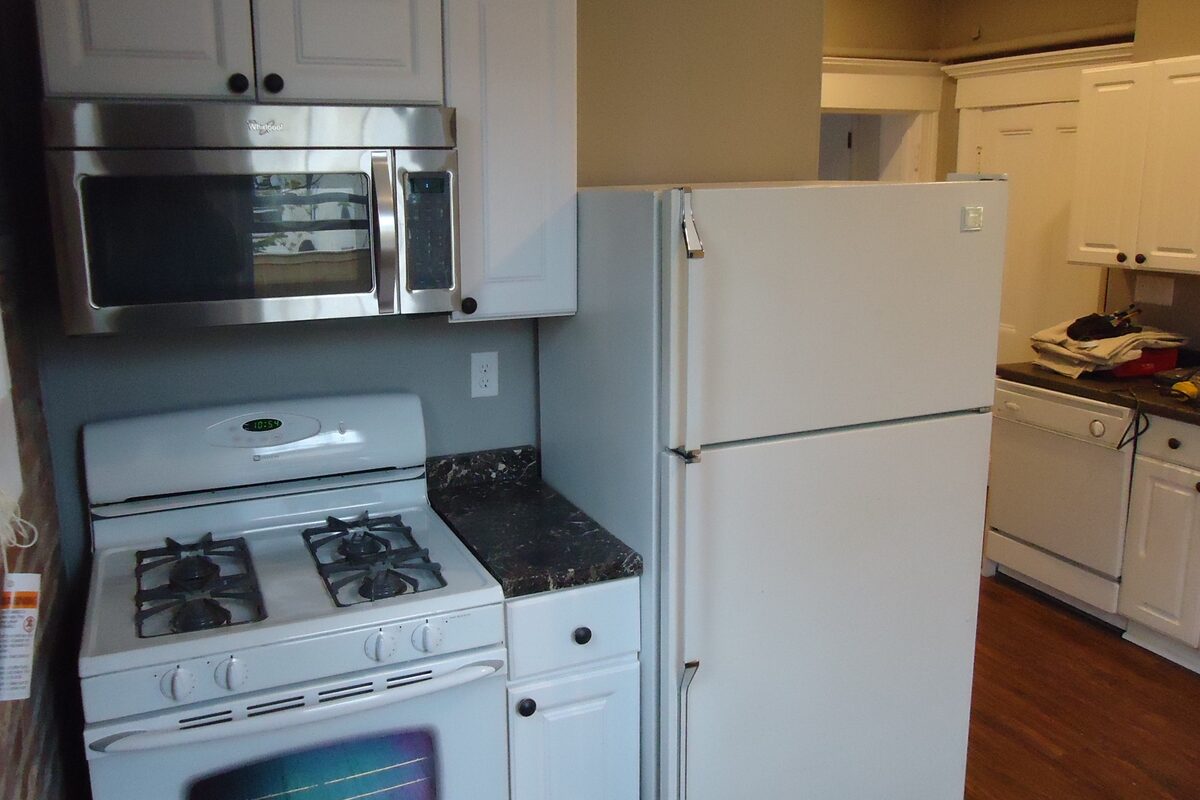
Cabinet paint fails at the edges and around handles first. Our team spends the time on degreasing and primer so those spots hold up.
Straight answers on cost, durability, oak grain and how long the kitchen is out of use.
Cabinet painting is priced by the number of doors, drawers and boxes and the finish you choose. HomeGuide's national benchmark is $2,000 to $6,500 for an average kitchen, or $70 to $125 per door (February 2025). That is a national figure; your quote comes from counting your kitchen.
Read the national cost sources and assumptions.
Question about your property? Call (980) 243-8188With proper degreasing, a bonding primer and a cabinet-grade enamel, many years of normal use. The finish is fully hard after the cure time on the label, often two to four weeks; until then, treat edges gently.
Question about your property? Call (980) 243-8188Yes, unless the grain is filled. Some people like the texture. For a smooth, furniture-like finish we apply grain filler before primer, which adds time and cost.
Question about your property? Call (980) 243-8188Mostly. The doors leave the room, so shelves are open, and the boxes are masked and painted in place over a day or two. Plan on a few days of limited counter access.
Question about your property? Call (980) 243-8188Usually just the outside of the boxes, the doors on both sides, and the drawer fronts. Painting the interiors is available but adds a lot of time.
Question about your property? Call (980) 243-8188Paint if the boxes are solid and you like the layout. Replace if the boxes are swollen from water, the particleboard is crumbling, or the layout does not work.
Question about your property? Call (980) 243-8188Laminate can be painted with the right bonding primer. Peeling thermofoil cannot; the film has to come off first, and replacing the doors is often the better choice.
Question about your property? Call (980) 243-8188Yes. If the new pulls have a different hole spacing, we fill and sand the old holes before priming.
Question about your property? Call (980) 243-8188Send a photo of a door, the inside of a box, and the whole kitchen. We will tell you whether paint is the right fix before booking an estimate.